

How to Turn a Business Community Into Referrals, Partnerships, and Opportunities
A strong business community can do something that one-off networking events rarely achieve on their own.
It can create trust at scale.
That matters because referrals, partnerships, and meaningful business opportunities do not usually begin with a single introduction. They grow when people see each other more than once, understand what each person does well, and feel confident making the right connection.
This is why business communities matter. Not because they are social. Not because they are busy. But because they create the conditions in which commercial relationships can grow more naturally.
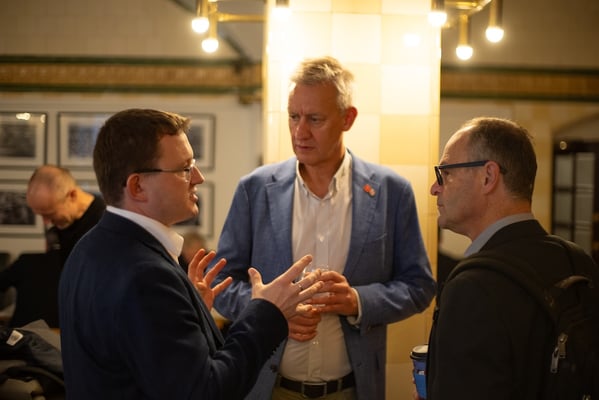

Why Business Communities Matter More than Once-Off Events
A one-off event can help you meet someone new. A community helps you stay visible.
That difference is important.
In one-off networking, people often have one conversation and then disappear back into their calendars. In a community, there are more chances to build familiarity, continue discussions, notice where people fit, and spot opportunities for collaboration.
That is often where the real commercial value begins.
For PBLINK, this matters especially because the audience appears to include both a large newsletter segment and a smaller but more senior member segment. That means content should help readers understand the difference between simply receiving updates and actively using a business community to create momentum.
The Difference Between Attending and Participating
A lot of people assume that showing up is enough.
It is not.
Attending means you were present. Participating means people remember you, understand your value, and know when to involve you.
Participation can include:
- joining conversations with intention
- following up after events
- introducing people to each other
- sharing useful insights or opportunities
- supporting other members’ visibility
- showing up consistently enough to build familiarity
The shift from attendance to participation is often what turns a membership or community into something commercially useful.
How Refferals actually start inside a Trusted Network
Referrals are rarely random.
Most good referrals happen when three things are true:
- people understand what you do
- they trust how you work
- they can picture the type of person or business you help best
That means if you want more referrals, you need to make yourself easier to refer.
You can do that by being clear about:
- who you help
- what problem you solve
- what kind of introduction is useful
- what makes your approach distinctive
People are much more likely to refer you when they can explain your value simply and with confidence.
What kinds of Partnerships grow from Communities
Referrals are only one outcome.
Communities also create partnerships.
These may include:
- cross-referral relationships
- event collaborations
- strategic introductions
- shared audience opportunities
- market-entry support
- informal advisory relationships
- joint offers between complementary businesses
This is why community-led business relationships can be more powerful than purely transactional networking. A community makes it easier to see where businesses complement each other and where value can be created beyond a single deal.
For a network like PBLINK, that is especially relevant for founders, directors, and partners looking to grow across the UK while staying connected to a Polish or Polish-linked business ecosystem.
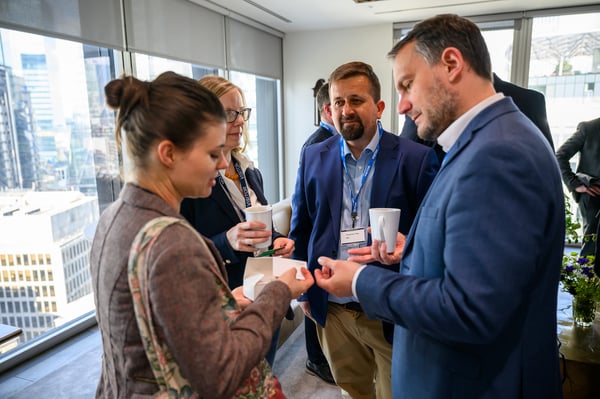
How to stay visible between events
A business community only creates opportunities if people continue to notice and remember you.
That does not mean posting constantly or trying to be everywhere. It means staying visible in ways that feel relevant and consistent.
Useful ways to stay visible include:
- following up after meetings and events
- commenting thoughtfully on other members’ updates
- sharing a useful introduction
- attending consistently enough to be remembered
- contributing insight when it is genuinely helpful
- showing interest in other people’s priorities, not only your own
The goal is not volume. The goal is relevance.
What members should do in their first 60 days
If you want faster value from a business community, the first two months matter.
Here is a simple 60-day approach.
Days 1 to 15
- attend an event or community touchpoint
- introduce yourself clearly
- connect with relevant people quickly afterward
Days 16 to 30
- book one or two follow-up conversations
- identify possible collaborators, introducers, or strategic contacts
- observe which people and themes come up repeatedly
Days 31 to 60
- contribute something useful to the community
- reappear in the right rooms
- make one or two thoughtful introductions if appropriate
- focus on relationship depth, not just network size
This is how a community becomes useful. Not through passive membership, but through clear and consistent participation.
How to know whether your community involvement is paying off
You do not need a complex scoring system to judge community value.
You can ask practical questions such as:
- Have I built stronger commercial relationships?
- Do more people understand what I do?
- Have I received better introductions?
- Have I identified partnership opportunities?
- Have I increased my visibility in the right business circles?
- Has the community influenced pipeline, trust, or market access?
These outcomes often matter long before revenue is directly attributed.
That is important, because community value is often cumulative. The more consistently you contribute, the more clearly your value becomes understood.
Why Communities are commercially underestimated
One reason business communities are underestimated is that people often judge them too quickly.
They attend one or two events, do very little follow-up, and then decide there was no value.
But communities work differently.
Their strength is not only in who you meet today. It is in how often the right people see you, hear about you, and begin to associate you with a specific type of value.
That is what creates trust. And trust is what creates referrals, partnerships, and opportunities.
Final Thought
A business community becomes commercially valuable when you stop treating it as a calendar activity and start treating it as a relationship engine.
The people who get the most from communities are not always the loudest. They are usually the clearest, the most consistent, and the most useful to others.
If you want stronger referrals, better partnerships, and more opportunity flow, the answer is rarely just “attend more.”
The answer is participate better.
.jpg?width=711&height=400&name=PBLINK-Just-Networking%20(1).jpg)
FAQ
How do business communities create referrals?
Business communities create referrals by building trust, familiarity, and clarity over time. When people understand what you do and trust how you work, they are more likely to recommend you.
How can I get more value from a membership community?
Participate consistently, follow up after events, stay visible between meetings, and be clear about the kinds of opportunities or introductions that are relevant to you.
What is the difference between networking and community?
Networking often focuses on introductions. Community adds continuity, trust, repeat visibility, and the deeper relationships that make referrals and partnerships more likely.
Can a business community really help with partnerships?
Yes. Communities often help businesses discover complementary partners, shared audiences, collaboration opportunities, and trusted local connections.
What is the fastest way to waste a business membership?
The fastest way is to stay passive. If you only observe and never participate, people are much less likely to remember you or create opportunities around you.