
When planning a multilingual event, it is easy to think of interpreting as simply “someone speaking another language”.
In reality, successful multilingual communication depends on three elements working together: the right interpreting mode, the right interpreting team and the right equipment.
Getting that combination right at the planning stage can make a significant difference to the quality of the event and the experience of speakers and delegates alike.
Simultaneous interpreting: why two interpreters?
For conferences, presentations, panel discussions and other events where speakers continue without pausing for interpretation, simultaneous interpreting is usually the most suitable solution.
The interpreter listens, processes the message, reformulates it in another language and speaks almost at the same time - while continuing to listen to what comes next.
It requires an exceptional level of concentration.
For this reason, these assignments are normally covered by at least two conference interpreters, who work in turns and support each other throughout the event.
And when one interpreter is off microphone, they are not simply “having a break”. They may be:
- following the speaker and presentation closely;
- checking terminology, figures, names and acronyms;
- locating information in presentations or briefing materials;
- helping their colleague with an unexpected technical term;
- monitoring sound and continuity.
It is very much a team effort, helping maintain concentration, accuracy and consistency throughout the event.
The booth is part of the interpreting solution
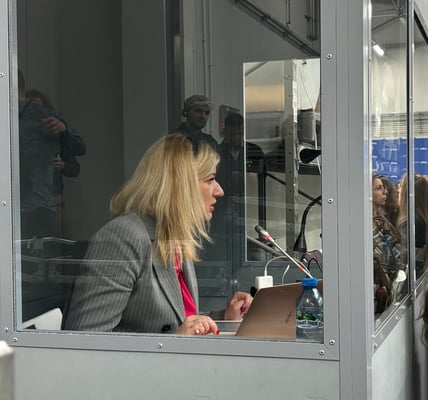
For conferences and formal meetings, a professional interpreting booth provides much more than sound isolation.
It allows interpreters to hear speakers clearly through professional audio equipment while still being able to see the speaker, presentation slides and what is happening in the room.
That visual context matters. Conference interpreters do not work with words alone - body language, slides, videos, changes of speaker and reactions in the room all contribute to understanding the message.
The booth also prevents the interpreters’ voices from disturbing participants listening to the original language.
And above all, sound matters.
If an interpreter cannot hear the speaker clearly, even the most experienced professional cannot reproduce the message accurately.
When a tour guide system is the right choice
Portable interpreting equipment, often called a tour guide system, is an excellent solution when mobility is important.
It works particularly well for:
- factory and production-site visits;
- museum and facility tours;
- situations where the group and interpreter need to move around.
The interpreter speaks into a portable microphone and participants listen through individual receivers and headsets.
It offers flexibility and freedom of movement, but it does not provide the same acoustic separation or working environment as a professional interpreting booth.
It is therefore not simply a cheaper version of a conference interpreting system. It is a different solution designed for a different purpose.
Consecutive interpreting: ideal for many business meetings
Not every multilingual meeting requires simultaneous interpreting.
For business negotiations, smaller meetings, interviews and diplomatic visits, consecutive interpreting can be an excellent solution.
The speaker talks for a section of the conversation, the interpreter listens and takes notes and then reproduces the message in the other language.
In many such situations, one professional interpreter may be sufficient, depending on the length and intensity of the assignment.
Consecutive interpreting also gives participants time to reflect on what has been said, which can work particularly well during negotiations where precision and nuance are important.
One event may require more than one solution
There is no single interpreting set-up that works for every event - and sometimes there is no single solution even within the same event.
Let’s imagine an international company hosting overseas guests for the day.
The morning programme might include presentations requiring two simultaneous interpreters and a professional booth.
After lunch, the delegates may visit a production facility, where a portable tour guide system would allow everyone to move around freely.
The day might then finish with a smaller management discussion using consecutive interpreting.
Same languages. Same event. Three very different interpreting solutions.
Questions worth asking at the planning stage
Involving an interpreter early in the planning process can help establish what will work best.
Useful questions include:
- How many participants will attend?
- Which languages will be required?
- Will participants remain seated or move around?
- Will there be presentations, panel discussions or workshops?
- What audiovisual equipment is already available at the venue?
- How technical is the subject matter?
- When will presentations and preparation materials be available?
The answers help determine whether the best solution is a team of interpreters in a professional booth, portable interpreting equipment, consecutive interpreting - or a combination of different modes during the same event.
Interpreting is part of the event infrastructure
For a multilingual event to work well, interpreting should be considered alongside sound, lighting and audiovisual production: an integral part of the event infrastructure rather than an afterthought.
The right interpreters, equipment and working conditions allow participants to focus on the message rather than the language barrier.
And that is ultimately what good interpreting should achieve: communication that feels effortless to the audience, even though a great deal of expertise, preparation and teamwork is happening behind the scenes.
Planning a multilingual event?
If you are unsure whether you need one interpreter or two, simultaneous or consecutive interpreting, or a professional booth or portable equipment, send me your agenda, timings, venue details and language requirements. I will be happy to advise on the most suitable interpreting set-up for your event.
Ewa Jasinska-Davidson, LinkedIn
Conference & Business Interpreter
Contact form: https://www.ewajasinska.com/english-to-polish-translation-contact-ewa/